Managing Customer Growth Effortlessly
Managing a business means handling many customer interactions every day—through forms, calls, emails, and support requests. Tracking all of this manually can quickly become confusing and inefficient.
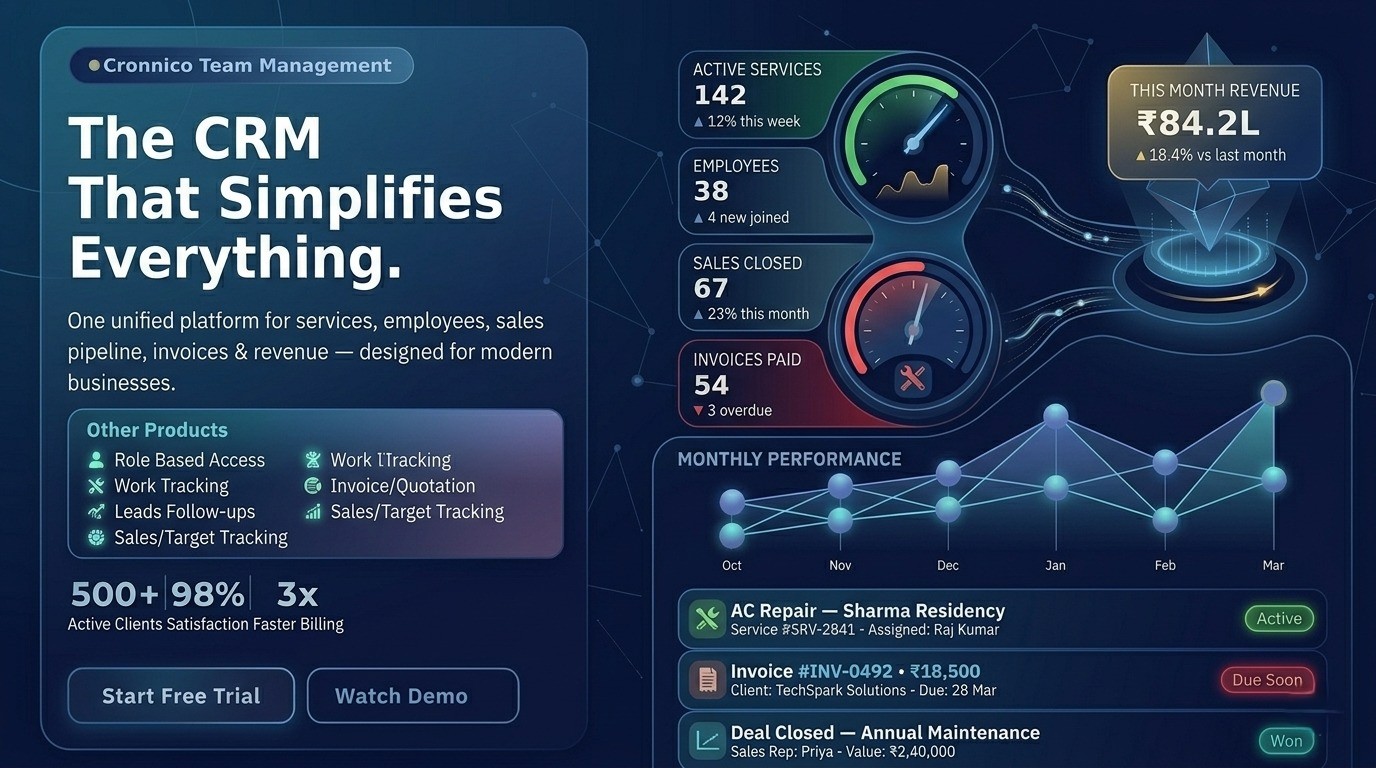
CRM (Customer Relationship Management) software solves this by storing customer data, communication history, and follow-ups in one centralized system. It helps businesses understand customers better, improve communication, and build long-term relationships while streamlining sales, marketing, and support operations.
How Businesses Actually Use CRM Software
A modern CRM system works across different departments of a business, helping teams stay organized and manage customer interactions more efficiently
Sales Management
A modern CRM system works across different departments of a business, helping teams stay organized and manage customer interactions more efficiently.
Lead Management
CRM systems give support teams access to previous conversations, requests, and issues. This allows businesses to provide faster and more personalized service, improving customer satisfaction and long-term relationships.
Customer Support
CRM systems give support teams access to previous conversations, requests, and issues. This allows businesses to provide faster and more personalized service, improving customer satisfaction and long-term relationships.
Marketing Campaigns
CRM platforms help marketing teams create targeted campaigns by analyzing customer behavior and preferences. This enables businesses to send more relevant messages, which increases engagement and trust.
Industries That Benefit from CRM
CRM systems are now used across many industries because any business that interacts with customers regularly can benefit from them.
1. Real Estate
The real estate sector handles many property inquiries, site visits, and follow-ups. A real estate CRM helps agents manage leads, schedule meetings, and track deals more efficiently.
2. Small Businesses
As businesses grow, managing interactions becomes complex. CRM helps entrepreneurs organize leads, track communication, and manage sales activities in a structured way.
3. Retail & E-commerce
Retail relies heavily on data. CRM systems help track purchase behavior and preferences, allowing businesses to personalize offers and improve customer loyalty.
4. Healthcare
Hospitals and clinics use CRM to manage patient communication, appointment reminders, and service feedback, improving both coordination and patient experience.
Benefits of Using CRM Software in 2026
As businesses become more digital, CRM systems are evolving beyond simple contact management. Modern CRM platforms help companies manage customer relationships more effectively.
1. Automation Saves Time
CRM software automates repetitive tasks such as lead assignments, reminders, and follow-up emails. This allows teams to focus more on building strong customer relationships
2.Increased Visibility of Customers
CRM customer management systems, such as Cronnico CRM, offer a comprehensive picture of every customer's journey, assisting companies in comprehending client requirements and providing more individualized experiences.
3. Improved Sales Performance
A sales CRM helps teams track deals, manage opportunities, and focus on high-potential leads, which can improve conversion rates and overall sales productivity
Customer relationships are now the cornerstone of long-term success rather than merely a component of business. CRM software enables companies to track every interaction, organize customer data, and make more intelligent, insight-driven decisions.
Selecting the best CRM for small business can revolutionize lead management, sales execution, and customer loyalty for both startups and expanding companies. CRM technology will continue to be a vital component of sustainable growth in 2026 and beyond as automation and data continue to shape the future.
Are you prepared to streamline customer service and boost expansion? With Cronnico CRM , you can turn every customer interaction into an opportunity. Start your journey now.
